Calculate your home loan repayments based on today’s mortgage rate trends. As of Wednesday, January 14th, 2026, the prevailing interest rates for financing a 30-year fixed mortgage stands at 1.5% for private properties and 1.55% for HDB’s. In terms of floating rates, the lowest interest rate for a private property home loan stands at 1.55% and 1.6% for HDB’s (minimum loan amount of $500k).
ROSHI understands that calculating monthly mortgage repayments can seem daunting
to many homebuyers. However, our user-friendly mortgage calculator
aims to empower you with knowledge and clarity.
Simply input your potential property purchase price, current interest rates, and preferred loan tenure. ROSHI’s
mortgage calculator will provide a detailed breakdown of the estimated
principal and interest components in your monthly instalment.
Armed with this information, you can better evaluate loan options and make informed financial decisions. Adjust
the
variables to suit your budget and needs. Our mission is to help
home loan buyers in Singapore to gain a clear understanding of current options
to confidently achieve home ownership at the best possible rate and terms.
Mortgage interest rate is a key component of your monthly home loan repayments. Banks charge interest on the borrowed amount, which is added to your principal repayment each month. To calculate your mortgage interest, you'll need to know your loan amount, interest rate, and loan tenure.
The most common method for calculating mortgage interest is the amortisation formula. This formula factors in your principal balance, interest rate, and the number of payments over the life of the loan to determine your monthly interest charges. As you make payments, a portion goes towards reducing your principal, while the rest covers the interest expense.
How Much Can You Borrow for a Home Loan?
When applying for a home loan, one of the first questions you may have is, "How much can I borrow?" The answer depends on several factors, including your income, debt-to-income ratio, credit score, and the loan-to-value ratio of the property you want to purchase.
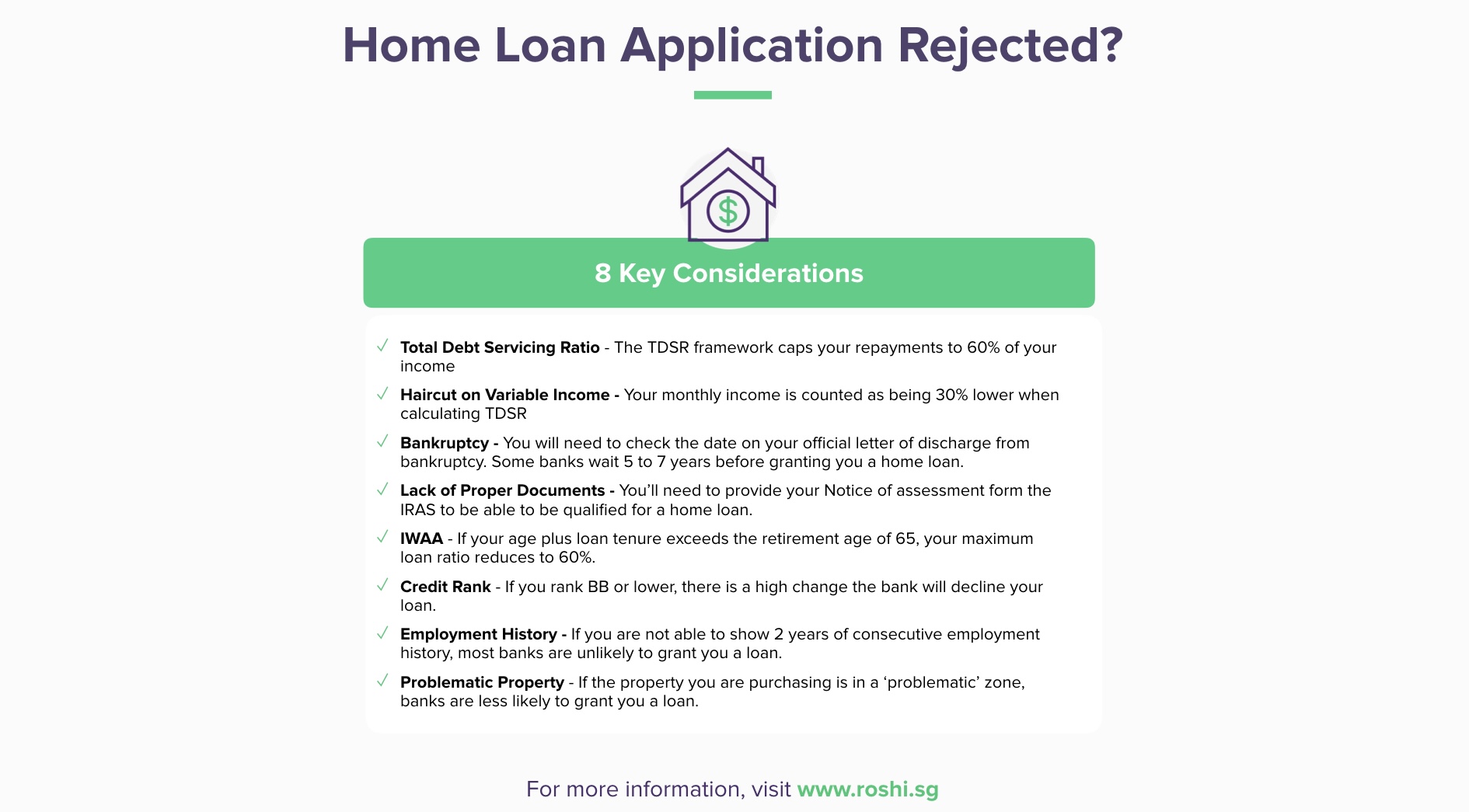
In Singapore, the Total Debt Servicing Ratio (TDSR) limits your total monthly debt repayments to 60% of your gross monthly income. This means that your home loan, combined with other debt obligations like car loans and credit card balances, cannot exceed 60% of your income.
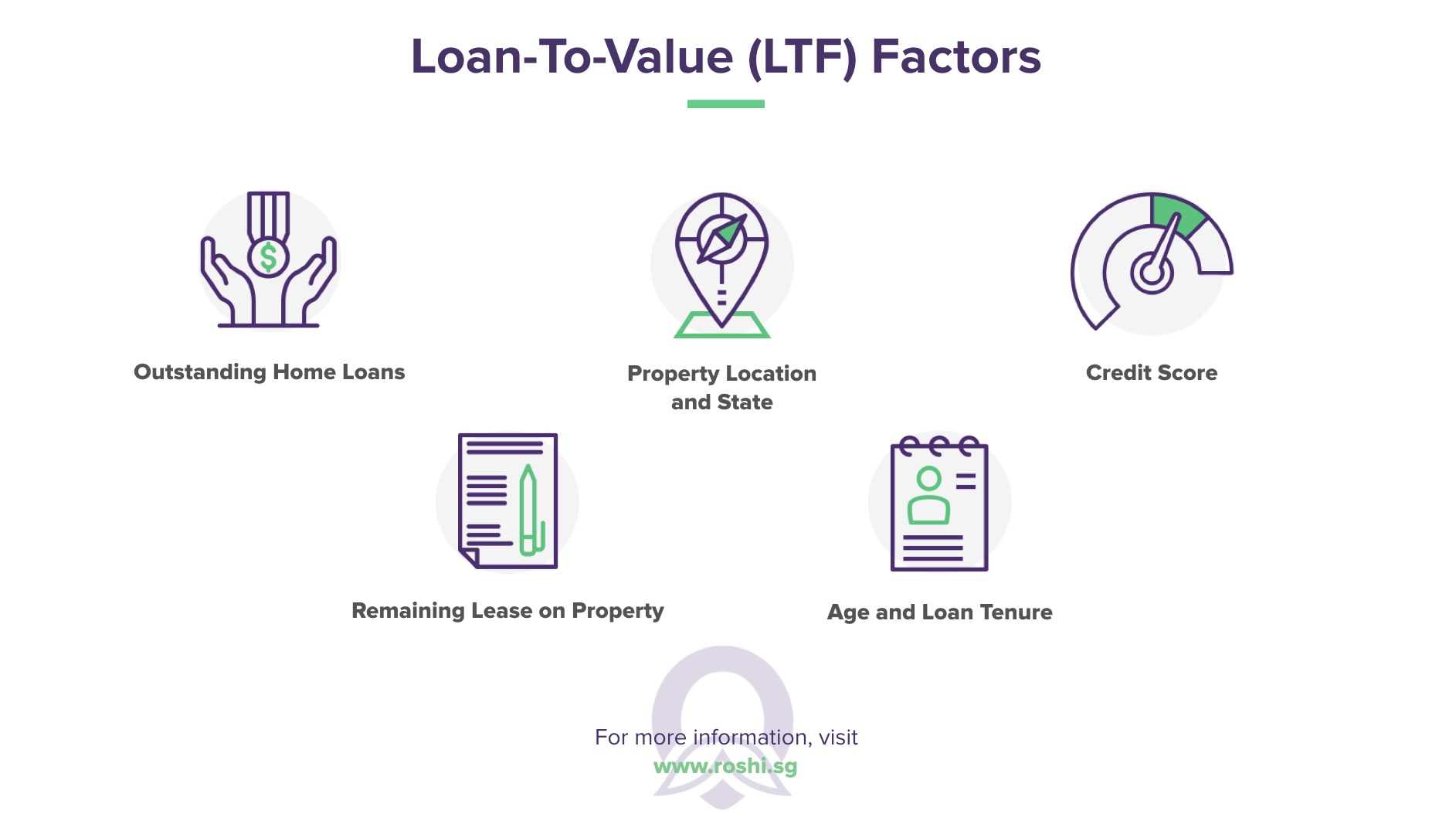
Banks also consider your loan-to-value (LTV) ratio, which is the amount you can borrow relative to the property's value. For example, if the LTV is 75%, you can borrow up to 75% of the property's value, and you'll need to cover the remaining 25% with your down payment and cash savings.
Estimating Your Monthly Mortgage Payments
Before committing to a home loan, it's important to understand how much you'll need to pay each month. Your monthly mortgage payments will consist of two main components: principal repayment and interest charges.
To estimate your monthly mortgage repayments, you can use a mortgage calculator that takes into account your loan amount, interest rate, and loan tenure. Simply input these details, and our mortgage calculator will generate an estimated monthly payment figure.
Calculate Repayments Based On Current Interest Rates
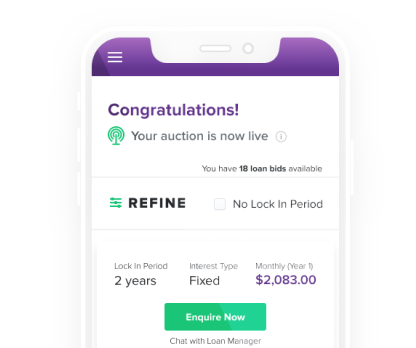
ROSHI offers customised loan options and updates in real-time, directly on our platform.
Avoid the hassle of contacting multiple lenders or brokers and receive personalised
strategies all on your dashboard and in one place.
A mortgage calculator is a useful tool for anyone looking to purchase a home. It helps you estimate your monthly mortgage payments based on various factors such as the purchase price, down payment amount, loan term, and interest rate. With hundreds of loan options available from licensed moneylenders and established banks, it can be difficult to determine which one is right for you. Using a mortgage calculator allows you to compare different loan options and determine what your monthly payments might look like.
While mortgage calculators provide an estimate, they are not a substitute for professional financial advice. It's important to consult with a financial advisor or mortgage broker to ensure that you fully understand the terms and conditions of any mortgage before signing on the dotted line. Still, a mortgage calculator can be a valuable tool in helping you navigate the home buying process and make informed financial decisions. Try using ROSHI's mortgage calculator today to get a better understanding of your mortgage payments.
How to Use The Repayment Calculator
You must have the following data:
Purchase Price
Enter the buying price or if you are refinancing, then just put the current value
Interest Rate
Ente the approved interest rate
Loan Tenure
Just adjust the number of years (mortgage length)
Calculate
This is the final step where you can finally view the yearly change of the total repayment including a breakdown of principal and
interest paid.
The Math Behind it
For those who are curious about how our calculator works, we utilize the following formula to calculate mortgages:
M = Monthly Mortgage Payment
P = Principal / Initial Amount of Loan
i = Interest Rate of the loan
n = Number of months or terms for a 30-Year Mortgage (30 years * 12 months = 360, etc.)
Benefits of Using a Mortgage Calculator
Calculating your monthly repayments is a crucial step in determining how much house you can afford. This is likely to account for the majority of your living expenses.
When you purchase a property or refinance a home, you can use ROSHI’s mortgage calculator to estimate your monthly repayments. To run scenarios, alter the loan details in the calculator which can assist you in making the following decisions:
If you are overpaying for your mortgage
The mortgage payment calculator will help you figure out how much you will have to pay each month, especially when you factor in all of your expenses, such as taxes, insurance, and private mortgage insurance.
The tenure of your home loan
The monthly payment on a 30-year fixed-rate mortgage is lower, but you’ll pay more interest over the life of the loan. The total interest you’ll pay will be lower with a 15-year fixed-rate mortgage, but your monthly payment will be greater.
Your down payment
It’s easier than ever to put down a little amount of money, with minimum down payments as low as 10%. The mortgage payment calculator can assist you in determining the optimal down payment based on your personal financial situation.
What Factors to Consider When Determining How Much You Can Borrow?
Lenders must evaluate your ability to repay the amount you wish to borrow. The debt-to-income ratio is one of many elements that go into that evaluation.
The percentage of pretax income that goes toward monthly debt obligations, such as the mortgage, auto payments, student loans, minimum credit card payments, and child support, is known as your debt-to-income ratio. Lenders prefer debt-to-income ratios of 36 percent or less — or a limit of $1,800 per month on a $5,000 monthly gross income before taxes.
Costs Which are Included in a Mortgage Repayment Plan
You might use ROSHI’s mortgage calculator if your mortgage payment only consisted of principle and interest. Most mortgage payments, however, have additional fees and charges. The following are the main elements of a monthly mortgage payment:
Principal
The initial loan amount is referred to as the principal. Each mortgage payment reduces the amount you owe on the principle.
Interest
This is the fee that the lender charges you for borrowing money. Interest rates are stated as a percentage of a year’s income.
Mortgage Insurance
This insurance safeguards the lender’s interests in the event that a borrower defaults on a loan.
How to Lower Your Mortgage Payments?
You can use the mortgage calculator to run scenarios to see how you can lower your monthly payments:
Extend the time period or the payment terms
Your payment will be cheaper over time if you choose a longer period, but you will pay more interest. Examine your amortization schedule to understand how extending your loan will affect you.
Reduce loan amount
A smaller loan equates to a lower monthly mortgage payment.
Reduce your interest rate
Making a higher down payment can help you avoid PMI while also lowering your interest rate. As a result, your mortgage payment will be lower on a monthly basis.
It’s possible that your monthly payment will increase over time if:
You have an adjustable-rate mortgage, and during the adjustment period, the rate climbs.
Your home loan servicer charges you a late payment fee.
The cost of property taxes or homeowner’s insurance increases. These costs are usually included in most mortgage payments.
What is a Home Mortgage’s Loan-to-Income Ratio?
The Total Debt Servicing Ratio (TDSR) framework regulates the loan-to-income ratio for a residential mortgage in Singapore. Your total debt obligations should not exceed 60% of your income. This covers mortgage loans, credit card debts, personal loans, and even unpaid appliance installments. Banks, on the other hand, may set higher limitations for refinancing. Every bank has different take up on this.
Is There a Cap on How Much Money I Can Borrow?
You can borrow up to 90% of the purchase price of your property with a HDB Concessionary Loan. The maximum loan amount for a bank loan is determined by the number of house loans you currently have. For the first housing loan, you can borrow up to 75 percent of the property purchase price, 45 percent for the second housing loan, and 35 percent for the third housing loan.
How to Figure Out How Much Your Mortgage Payment will be?
To find out how much you’ll be paying each month, enter the amount of your mortgage loan and the interest rate into the calculator above.
Is There a Maximum Loan Tenure?
For HDB flats, the maximum loan tenure is 30 years, and for private properties or Executive Condominiums, the maximum loan term is 35 years (EC). The percentage of your property’s price you can borrow depends on the length of your loan. To be eligible for the maximum loan, your loan term must be less than 30 years (for private residences and ECs) and more than 25 years (for commercial properties) (for HDB flats). At the end of the loan tenure, the borrower’s age cannot surpass 65. If you violate either of these conditions, your loan amount will be reduced by 20%
How Fixed Interest Rates Differs from Variable Interest Rates?
Over a set period of time, fixed rate packages maintain the same interest rate (typically 1 to 5 years depending on the package). This means that your loan package has a fixed rate that won’t fluctuate no matter what happens in the market. Fixed rate packages automatically switch to floating rates after the lock-in period expires.
Floating rate packages, on the other hand, feature interest rates that fluctuate daily based on the rise and fall of SIBOR and SOR rates. When opposed to fixed rate packages, these packages often feature lower interest rates at the onset, with SIBOR and SOR movements dictating how high or low the rate would be. Board rates and fixed deposit rates, not simply SIBOR/SOR, can be used to peg floating rates.
How Does Mortgage Insurance Work and What Does it Cover?
Mortgage insurance is a sort of insurance that covers your mortgage loan in the event of unforeseen circumstances. You will receive a lump sum payment that you or your family might utilize to pay down your mortgage. It’s sometimes referred to as mortgage term reduction insurance (MRTA). It is known as the Home Protection Scheme (HPS) for HDB and is required to be purchased if the property and loan are paid for using CPF. The MRTA is optional in the private property market.
Have a question? Ask us about anything!
You're in good hands. Our team is happy to answer all of your question. Fill out the form and we'll be in touch as soon as possible.
Review Mortgages from All Major Lenders
Website Information Disclosure
ROSHIis one of Singapore's leading loan matching platforms. We specialise in connecting borrowers with lenders offering personal loans, home loans and refinancing options.
The information published on our site is intended to be accurate and up to date but should not be construed as financial advice and does not consider your personal needs or financial circumstances. While our website provides factual loan information and general guidance, it should not replace professional advice from a licensed financial advisor. Users should consider whether the loan products featured on ROSHI are appropriate for their specific needs.
Loans marked as "Sponsored" are prominently displayed at the top of each page or listing table. As a result of commercial partnerships, ROSHI may receive compensation from lenders when users click on application links, submit inquiries, or successfully secure loans. "Sponsored" loan options should not necessarily be considered the best available or most appropriate for your personal situation.
When our site links to particular loan products, we may receive a referral fee, commission, or payment when users click through our site, apply for, and successfully secure a loan.
Loans listed in our comparison tables are sorted based on various factors including interest rates, fees, features, and popularity. ROSHI provides various filters to help borrowers sort through options and identify benefits.
ROSHI takes an open and transparent approach to its loan matching services. Borrowers should be aware that while we operate independently, our platform does not include all available loan products in Singapore.
Some lenders may offer their loan products through multiple channels, brands, or associated companies, which can make it challenging to comprehensively compare them. ROSHI strives to help borrowers better understand available options through unbiased and well-researched loan information.
Have a question? Ask us about anything!
You're in good hands. Our team is happy to answer all of your question. Fill out the form and we'll be in touch as soon as possible.