
Our Expert says
The Minimum Payment Is Not Your Friend
Credit card minimum payments are calculated to maximise interest revenue for the bank not to help you pay off debt. A $10,000 balance with minimum payments only can take over 15 years to clear, costing more than $15,000 in interest which means you'd pay more than double the original amount borrowed.
When using our calculator compare minimum only payments against fixed higher amounts. Even increasing from $200 to $400 monthly can cut payoff time by 70% and save thousands in interest.

Trinh Thanh
Head of Research

The True Cost of Minimum Payments
How Minimum Payments Cost You More
Same debt vastly different outcomes based on payment amount.
| Minimum Only ($200) | $400 per month | $600 per month | $1,000 per month | |
|---|---|---|---|---|
| $5,000 | 32 months = $1,400 interest | 14 months = $580 interest | 9 months = $370 interest | 5 months = $210 interest |
| $10,000 | 94 months = $8,800 interest | 31 months = $2,400 interest | 19 months = $1,400 interest | 11 months = $780 interest |
| $20,000 | 180+ months = $26,000+ interest | 76 months = $10,400 interest | 43 months = $5,800 interest | 23 months = $3,000 interest |
Alternatives to High Credit Card Interest
Lower Cost Options to Clear Credit Card Debt
| Option | Interest Rate | Best For |
|---|---|---|
| Balance Transfer | 0% for 6 to 12 months (promotional) | Debt that can be cleared within promo period |
| Personal Loan | 5% to 12% EIR | Debt requiring 1 to 5 years to clear |
| Debt Consolidation Plan | 6% to 11% EIR | Debt exceeding 12x monthly income; MAS-regulated |
Interest Rate Trends
Below is an overview of current interest rate trends in Singapore:
Today's moneylender interest rate trends in Singapore
Today's moneylender interest rate trends in Singapore - As of 27 May 2026, licensed moneylenders are charging an average interest rate of approximately
3.84% per month just under the legal cap of 4%.
Monthly Interest Rate Trends (April 2026)
Research updated by Trinh Thanh on 6 May 2026 - Entering May 2026, Singapore’s credit card repayment loan segment continues to remain stable, with no major changes to lending regulations, repayment structures or borrowing conditions. Demand in this category continues to be driven mainly by individuals looking to manage outstanding credit card balances more effectively and reduce monthly financial pressure.
Borrowers continue seeking repayment solutions that offer lower interest costs compared to maintaining revolving credit card balances over extended periods. Across the market, pricing trends remain relatively consistent with April, with banks continuing to provide structured repayment programmes at lower Effective Interest Rates, while licensed moneylenders continue operating within Singapore’s regulated monthly interest cap framework. Overall approval conditions and repayment structures have shown little movement compared to previous months.
Licensed Moneylenders
As of May 2026, licensed moneylenders regulated by Singapore’s Registry of Moneylenders continue to offer unsecured loans that may be used for credit card repayment purposes. Average monthly interest rates remain around 3.8%, staying slightly below the legal cap of 4% per month.
These loans continue to appeal mainly to borrowers who require faster access to funds or may not fully qualify for structured bank repayment programmes. Approval decisions continue focusing on income verification, employment consistency and repayment affordability, with borrowers potentially qualifying for loan amounts of up to six times their monthly income depending on financial capacity.
Administrative fees remain capped at 10% of the principal amount, while late payment charges generally continue to stay within the S$60 monthly regulatory limit. Applications may still be started online, although borrowers continue to be required to complete identity verification and sign loan agreements in person before funds are released. Once verification has been completed, approvals are often processed within a relatively short timeframe.
These loans continue to appeal mainly to borrowers who require faster access to funds or may not fully qualify for structured bank repayment programmes. Approval decisions continue focusing on income verification, employment consistency and repayment affordability, with borrowers potentially qualifying for loan amounts of up to six times their monthly income depending on financial capacity.
Administrative fees remain capped at 10% of the principal amount, while late payment charges generally continue to stay within the S$60 monthly regulatory limit. Applications may still be started online, although borrowers continue to be required to complete identity verification and sign loan agreements in person before funds are released. Once verification has been completed, approvals are often processed within a relatively short timeframe.
Banks
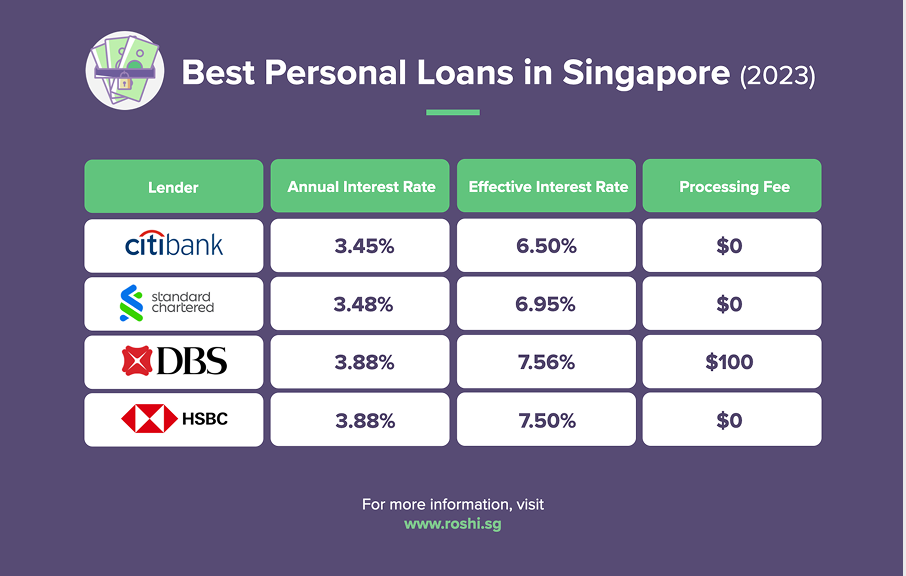
Banks continue to remain the primary providers of structured credit card repayment solutions in Singapore, particularly through balance transfer programmes, personal loans and Debt Consolidation Plans designed to reduce the cost of maintaining high-interest revolving balances.
Effective Interest Rates for these products generally continue ranging between around 4% and 9%, depending on the bank, repayment tenure and borrower profile. Promotional balance transfer programmes also continue to remain available across major banks, although borrowers still need to review processing fees and repayment conditions carefully before applying.
Bank applications continue involving more detailed approval procedures, including credit bureau checks, income verification and assessments of existing outstanding debt levels. Approval timelines may continue extending over several business days depending on the borrower’s financial profile and the complexity of the application.
Because of this, bank repayment solutions continue to be more suitable for borrowers who are planning repayment restructuring in advance and are focused on reducing long-term borrowing costs rather than obtaining immediate access to funds.
Effective Interest Rates for these products generally continue ranging between around 4% and 9%, depending on the bank, repayment tenure and borrower profile. Promotional balance transfer programmes also continue to remain available across major banks, although borrowers still need to review processing fees and repayment conditions carefully before applying.
Bank applications continue involving more detailed approval procedures, including credit bureau checks, income verification and assessments of existing outstanding debt levels. Approval timelines may continue extending over several business days depending on the borrower’s financial profile and the complexity of the application.
Because of this, bank repayment solutions continue to be more suitable for borrowers who are planning repayment restructuring in advance and are focused on reducing long-term borrowing costs rather than obtaining immediate access to funds.
ROSHI Expert Insight
In May 2026, Singapore’s credit card repayment loan market continues to reflect the importance of repayment management and financial restructuring rather than new borrowing activity. Bank-based repayment programmes continue helping borrowers reduce the financial pressure associated with high-interest revolving credit card balances, while licensed moneylenders continue offering a faster alternative for borrowers who require more immediate access to financing.
From ROSHI’s perspective, borrowers should focus not only on reducing monthly repayment pressure but also on understanding the total repayment cost and loan tenure involved. Lower monthly instalments may improve short-term affordability but longer repayment periods can also increase total interest paid over time.
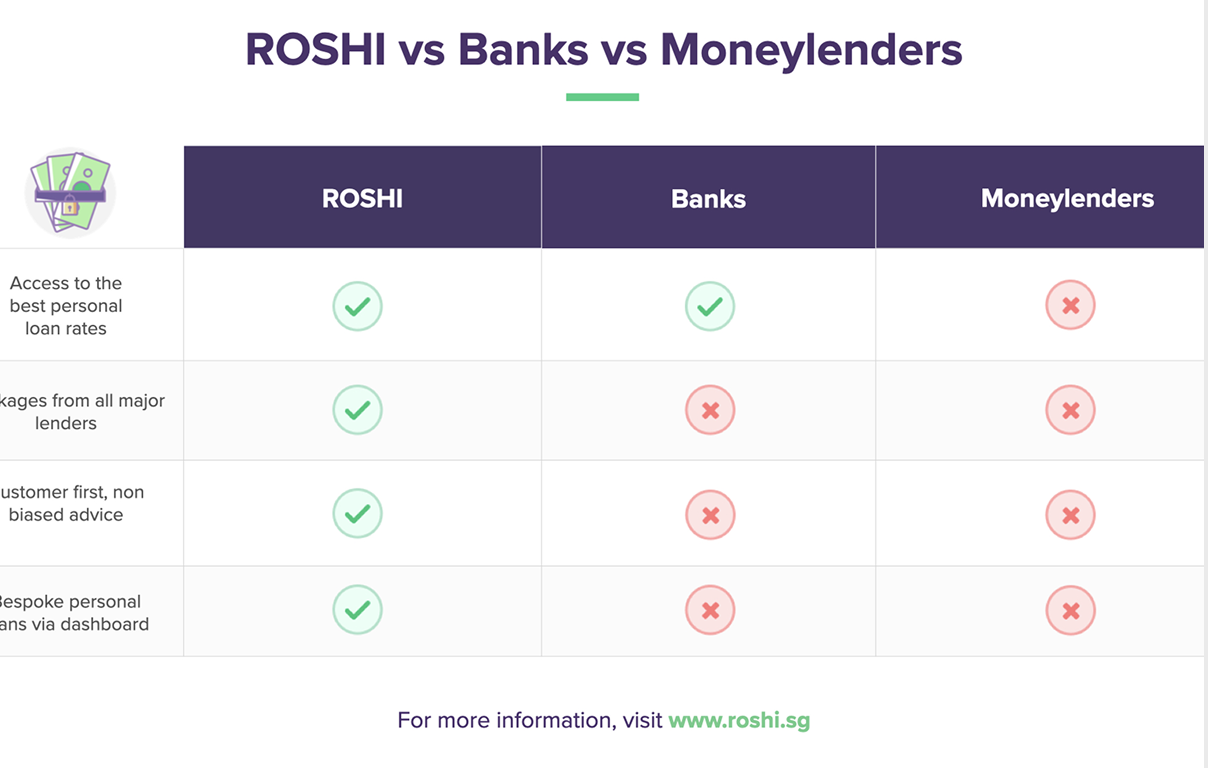
Through ROSHI’s platform, borrowers are able to compare available repayment options more clearly and evaluate financing solutions based on affordability, repayment flexibility and overall financial goals.
From ROSHI’s perspective, borrowers should focus not only on reducing monthly repayment pressure but also on understanding the total repayment cost and loan tenure involved. Lower monthly instalments may improve short-term affordability but longer repayment periods can also increase total interest paid over time.
Through ROSHI’s platform, borrowers are able to compare available repayment options more clearly and evaluate financing solutions based on affordability, repayment flexibility and overall financial goals.
What This Means for Borrowers
For borrowers in May 2026, Singapore’s credit card repayment loan market continues to provide a range of structured financing options depending on repayment goals, urgency and financial profile. Banks continue offering lower Effective Interest Rates and structured repayment programmes designed to help borrowers manage outstanding credit card debt more efficiently over time.
Licensed moneylenders continue to remain a practical option for borrowers who prioritise faster approvals or more flexible eligibility requirements, although borrowing costs remain higher compared to most bank repayment programmes. Because of this, careful repayment planning continues to remain important when using short-term financing to manage existing credit card obligations.
Singapore’s regulated lending environment continues supporting transparency across both bank and licensed lending channels through clear fee structures and disclosure requirements. By comparing financing options through platforms like ROSHI, borrowers can continue making more informed repayment decisions that balance affordability, repayment timelines and long-term financial stability.
Licensed moneylenders continue to remain a practical option for borrowers who prioritise faster approvals or more flexible eligibility requirements, although borrowing costs remain higher compared to most bank repayment programmes. Because of this, careful repayment planning continues to remain important when using short-term financing to manage existing credit card obligations.
Singapore’s regulated lending environment continues supporting transparency across both bank and licensed lending channels through clear fee structures and disclosure requirements. By comparing financing options through platforms like ROSHI, borrowers can continue making more informed repayment decisions that balance affordability, repayment timelines and long-term financial stability.


![Can’t Pay Back Your Credit Card Debt? Definitive Singapore Guide [Updated 2026]](https://www.roshi.sg/wp-content/themes/roshi/images/insights/paying-off-your-credit-card-debt-guide.png)